Baby sleep • Buying guide
What to Check Before Choosing an Organic Crib Mattress
An organic label can be a useful starting point, but it is not a complete guide to a baby’s sleep surface. The details that matter most are the mattress’s fit, firmness, construction, safety compliance and care requirements. Read beyond the front-of-package language to understand what the mattress is made of—and whether it is designed for the exact crib where it will be used.
A considered choice is less about finding the most elaborate list of materials and more about confirming that the essentials are clear, compatible and easy to maintain.
Begin with the crib, not the label
It is tempting to begin a search with a preferred material or certification. Yet the first practical question is simpler: Which crib will the mattress go in? Crib interiors and mattress dimensions are not details to estimate by eye. The mattress should be intended for the specific crib type and fit according to the crib manufacturer’s instructions.
Check the crib manual for its mattress requirements, including the acceptable size and any limits on mattress thickness. Then compare those specifications with the mattress maker’s measurements. A product described as “standard size” may still require careful verification. Measure the interior of the assembled crib if the manufacturer recommends it, and make sure the mattress is flat, stable and snug in the frame. If you are unsure about the fit, ask the crib or mattress manufacturer before use.
A gap around the mattress can create a hazard. Do not try to correct a poor fit with rolled towels, extra padding, a second mattress or another improvised insert. If the mattress does not fit the crib as intended, choose a compatible option rather than adapting the sleep space yourself.
Also confirm that the mattress is approved for the intended crib configuration. A mattress intended for a full-size crib, mini crib, portable crib or play yard is not automatically interchangeable with the others. Names and dimensions can vary, so rely on the product specifications and the crib maker’s guidance, not a familiar-sounding label alone.
Firmness is a safety feature, not a comfort contest
For an infant, a crib mattress should be firm and flat, with no sagging or soft, pillow-like surface. The word “firm” can feel subjective when shopping online, where photographs and marketing descriptions offer little sense of how a surface responds. Look for a mattress specifically designed and labeled for infant use, and check that the product meets applicable U.S. safety requirements.
A plush top layer, quilted cushion, added topper or soft pad may seem inviting to an adult, but the infant sleep surface should not be softened with accessories. Follow current safe-sleep guidance from trusted public-health authorities: place a baby on their back on a firm, flat surface intended for infant sleep, covered only by a fitted sheet. Keep loose bedding, pillows, comforters, stuffed toys and positioners out of the crib.
Firmness should be assessed as part of the complete mattress, not inferred from one ingredient. A natural latex core, cotton batting or wool layer does not, by itself, establish that a product is appropriate for an infant. Construction, thickness, resilience and the finished product’s compliance all matter. If the listing emphasizes plushness or pressure-relieving softness without clearly identifying the mattress as suitable for a crib and infant use, ask the manufacturer for clarification.
Do not rely on a mattress being labeled “organic” as proof of infant-sleep safety. Organic describes an aspect of materials or production; it does not replace the separate requirements for firmness, fit and safe use.
Read the construction from cover to core
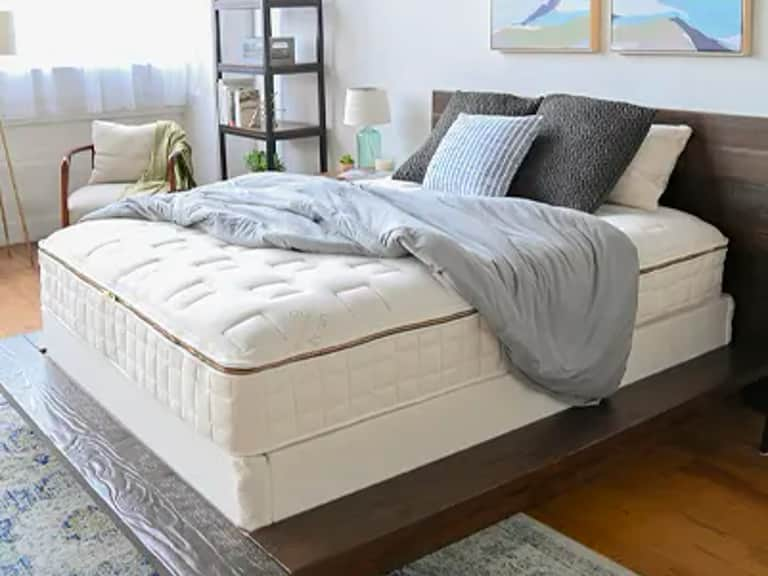
Good product information makes it possible to understand what lies beneath the fabric. Look for a clear materials breakdown that identifies the cover, padding or comfort layers, support core, seams and any barrier or adhesive used in construction. A broad phrase such as “made with natural materials” is not the same as a complete ingredient list.
The cover is the first layer a caregiver handles, but it is only one part of the mattress. A cotton cover might sit over a core made from a different material, while a wool or plant-fiber layer may be used for cushioning or as part of a flame-resistance design. Ask whether the description applies to the whole mattress or only selected components. If a manufacturer uses blends, coatings, treatments or laminated layers, those details can help you make a more informed comparison.
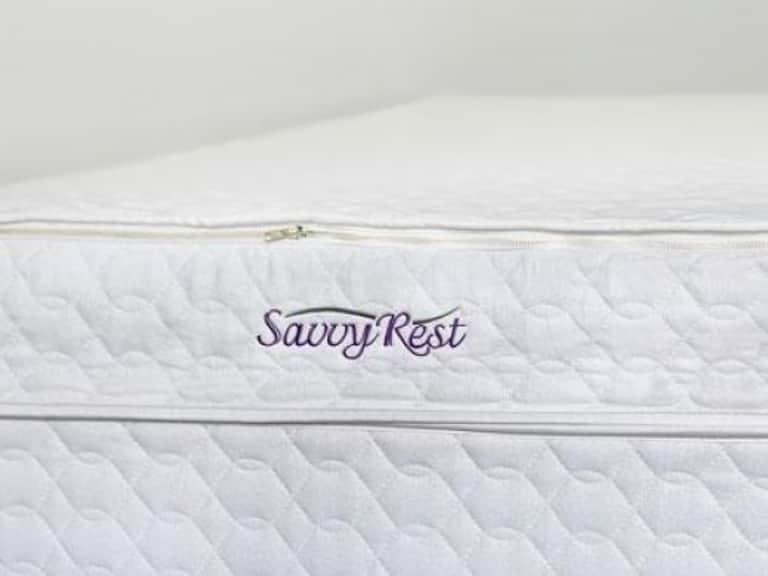
Construction details are practical, too. A removable cover may make some kinds of cleaning easier, but a removable cover is not necessarily washable. A zippered case should not be opened unless the manufacturer says it is designed to be removed and explains how to handle the layers safely. Some covers are spot-clean only; others may have specific washing or drying limits. Avoid assuming that an item is safe to launder simply because it can be unzipped.
Pay attention to how the mattress is assembled. Some products arrive compressed or in separate layers, and may need time to expand before use. Follow the manufacturer’s setup instructions and do not use the mattress until it has reached the required shape and condition. If assembly involves placing layers inside a cover, make sure the instructions explain their orientation and placement.
Understand what “organic” certification actually covers
Organic claims can refer to different materials, stages of production and certification programs. The important question is not simply whether the word appears on the package, but what has been certified and by whom. A certificate may apply to a textile, a particular fiber or an entire product under a defined standard. Those are not interchangeable claims.
For example, a textile certification may address how qualifying fibers are processed and handled, while a material-specific program may focus on a particular component. A certification for cotton does not automatically certify every other part of the mattress. Nor should a certification be read as a general endorsement of every performance or health claim made in an advertisement.
Look for the certifier’s name, the standard or program, the scope of certification and, where available, a certificate number or product listing that can be checked. If a brand says “certified organic,” ask whether the certification covers the finished mattress, the cover fabric, the filling or another named component. Clear answers are more useful than an assortment of logos without explanation.
It is also helpful to separate organic claims from other types of testing. A material or emissions certification may address a different question from an organic textile standard, and neither necessarily demonstrates that a mattress is suitable for infant sleep. Consider each claim on its own terms: what is being assessed, which parts are covered and what the result does—and does not—establish.
When a label is unclear, consult the certifying organization’s public guidance or contact the manufacturer. A trustworthy product listing should be able to explain its materials and certifications in plain language, without asking caregivers to infer the meaning from a green color palette or phrases such as “pure,” “clean” or “chemical-free.”
Check U.S. safety compliance separately
In the United States, crib mattresses are subject to federal safety requirements. The U.S. Consumer Product Safety Commission (CPSC) sets applicable requirements for products within its jurisdiction, including standards that address crib mattress safety. When comparing options, look for an explicit statement that the mattress complies with applicable U.S. requirements, and ask the manufacturer to identify the relevant standard if the information is not clear.
Safety compliance is distinct from organic certification. One does not replace the other, and an organic label alone does not show that a crib mattress meets the rules applicable to its product category. Conversely, a compliant mattress is not automatically organic. Caregivers comparing products can consider both dimensions, but should avoid treating them as a single claim.
Be wary of vague language such as “tested for safety” when it does not explain what was tested, by whom or against which requirements. A concise, specific compliance statement is more informative. If you need confirmation, ask for documentation or a direct explanation of the product’s status. Retailers may not have every technical detail at hand, so the manufacturer can be a useful next source.
Also check for current product notices and recalls before purchasing, particularly if considering a secondhand mattress. A mattress that appears clean may still be damaged, incompatible with the crib or missing important documentation. If you cannot establish its age, history, condition and fit, selecting a new mattress with clear product information may make the decision easier.
Plan for everyday care and moisture protection
A crib mattress has to work in real family life, where spills, leaks and routine cleaning are part of the picture. Read the care instructions before buying. Check whether the surface can be wiped clean, whether any cover can be washed, which cleaning products are permitted and whether the mattress must be dried in a particular way. Some materials should not be soaked, placed in a washing machine or exposed to high heat.
Ask whether the mattress is designed to be used with a waterproof cover or protector, and whether the manufacturer specifies a compatible type. Any protector should fit securely and preserve the intended flat, firm sleep surface. Do not add an ill-fitting layer, padding or loose material. Follow the product’s instructions and the crib maker’s guidance.
When cleaning, avoid harsh methods that could damage the cover or core. Do not use a product in a way the manufacturer prohibits, and allow the mattress to dry fully if the care instructions call for it. Moisture trapped inside a mattress can affect its condition over time. Regularly check for stains, tears, loose seams, sagging, warping or other signs that the product may no longer be in good condition.
Care instructions are not an afterthought. A mattress that requires specialist cleaning may be less convenient than one with straightforward upkeep, while a washable component can still have limits on water temperature, detergent or drying. Choose an option whose maintenance requirements fit your household—and keep the instructions where they are easy to find.
Compare lifespan, warranty and practical details
Before deciding, review the manufacturer’s warranty, its exclusions and the steps required to make a claim. Note whether the warranty covers defects in materials or workmanship, how long it lasts and whether the original purchaser must retain proof of purchase. A warranty is not a substitute for correct fit, careful use or regular inspection, but it can clarify what support is available if a product problem arises.
Confirm the mattress’s dimensions, thickness, weight and delivery format. Check whether it ships in a box, arrives in multiple pieces or requires setup. If the product is compressed, review the instructions for unpacking and expansion. Consider whether the mattress can be moved through your home and whether the packaging and delivery schedule suit your needs.
Price alone is a poor measure of value. A higher price may reflect materials, construction, certification or a particular design, but it does not establish that the mattress is a better fit for a specific crib or household. Compare like with like: product dimensions, infant suitability, support construction, certifications, safety information, cleaning requirements and warranty terms.
One useful approach is to make a short comparison sheet rather than trying to remember each listing. Record the crib’s requirements, the candidate mattress dimensions, the materials in each layer, the exact certification scope, the compliance statement and the care instructions. This turns a crowded marketplace into a set of concrete questions with answers you can verify.
Questions worth asking the manufacturer
Product pages sometimes leave out the details that matter most. A brief inquiry can reveal whether the company can explain its materials and use instructions clearly. Consider asking:
- Is this mattress intended for the exact type of crib I have?
- What dimensions and thickness does the manufacturer specify, and are there crib compatibility instructions?
- Does the finished mattress meet applicable U.S. crib mattress safety requirements?
- Which materials are used in the cover, each comfort layer, the support core and any barrier or treatment?
- Which parts are certified organic, and which organization or standard applies?
- Is the mattress cover removable, washable or spot-clean only?
- What type of fitted sheet or protector, if any, is compatible with the product?
- What are the setup, inspection and replacement recommendations?
Clear answers should be specific and consistent with the written instructions. If a response relies mostly on broad assurances—“all natural,” “chemical-free” or “the safest choice”—without addressing dimensions, use or care, continue your research. A polished brand story may be appealing, but precise product information is what helps a caregiver make a sound comparison.
A calm, practical checklist
Before placing an organic crib mattress in a baby’s sleep space, make sure the decision rests on verifiable details rather than a single headline claim. Confirm that the mattress:
- Is intended for the crib type and model, with dimensions that match the crib manufacturer’s instructions.
- Provides a firm, flat infant sleep surface and is used without added toppers or padding.
- Has a clearly described cover, core and any additional layers or barriers.
- Explains exactly which materials are certified organic, if applicable.
- Includes clear information about applicable U.S. safety compliance.
- Can be cared for according to instructions that make sense for your household.
- Has understandable warranty, setup and condition guidance.
Once the mattress is in place, keep the sleep space simple: use a fitted sheet designed to fit securely, and follow current safe-sleep recommendations. Check the mattress and crib periodically for fit and condition, and return to the manufacturer’s instructions whenever something is uncertain.
The bottom line
An organic crib mattress is best evaluated as a complete product, not as a promise distilled into one word. Materials and certification matter to families who prioritize them, but they sit alongside the fundamentals: a correct fit, a firm and flat surface, clear safety information and care instructions that can be followed in everyday use.
Take time to compare the label with the detailed specifications. Verify the crib’s requirements, ask what each certification covers and choose a mattress whose construction and maintenance are transparent. With those practical checks in place, the decision can feel less like decoding marketing language and more like selecting a well-understood part of a carefully prepared sleep space.
This article is for general educational purposes and is not a substitute for product instructions or individualized medical advice. For current infant safe-sleep guidance, consult trusted public-health sources and your child’s healthcare professional.